
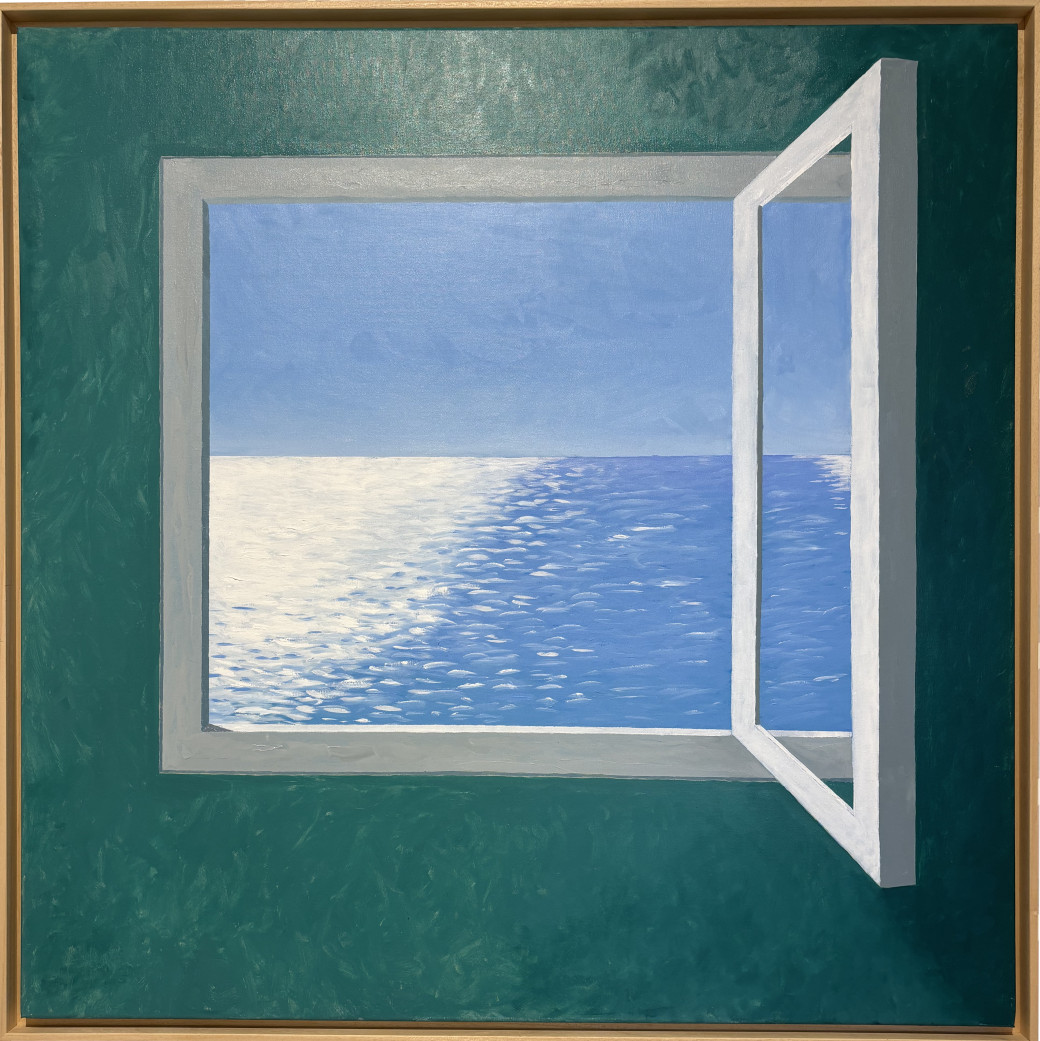
Banco de niebla, 2026
Oil on canvas
100 x 100 cm
I'm interested

The sea stands at the core of Miguel Sánchez-Cuenca’s work, understood as a space of contemplation, freedom and inner projection. His paintings present scenes of suspended time, where the horizon—most often marine—becomes a site of transition and reflection. This recurring presence of the horizon connects his work to a sensibility close to Romanticism, in its affirmation of the individual in the face of the limitless, as well as to the essential landscapes of Georgia O’Keeffe, in which vastness and silence acquire an emotional dimension.
Through a refined, geometric visual language, close to minimalism, the artist removes the superfluous in order to focus on what is essential. Solitary boats, isolated llaüts or receding sails suggest physical and existential journeys, moments of change and new life stages, always conveyed with a sense of balance and serenity. The reduced scale of these elements in relation to the expansive pictorial space reinforces the relationship between fragility and resilience, a constant throughout his practice.
In other works, the viewpoint shifts to solid ground. Empty chairs facing the sea introduce the human presence indirectly and remain open to interpretation, evoking waiting, introspection or the desire for contemplation. In these scenes, echoes of Edward Hopper’s quiet solitude can be perceived, alongside references to the metaphysical painting of Giorgio de Chirico, visible in certain framings, in the subtle disruption of perspective and in the construction of dreamlike spaces.
The influence of architecture and design is evident in the clarity of the compositions, the prominence of straight lines and the careful organization of space. Added to this is a distinctly Mediterranean light, which brings vivid, contrasting colors and establishes a subtle dialogue with the aesthetics of Pop art. The use of color also responds to a personal process: like superimposed layers, each stage of life is translated into brighter or more restrained palettes, as well as into compositions that are more stable or more tense. In this way, Miguel Sánchez-Cuenca’s work invites the viewer into an open, intimate and deeply contemporary experience.

X
Oil on canvas
100 x 100 cm
I'm interested
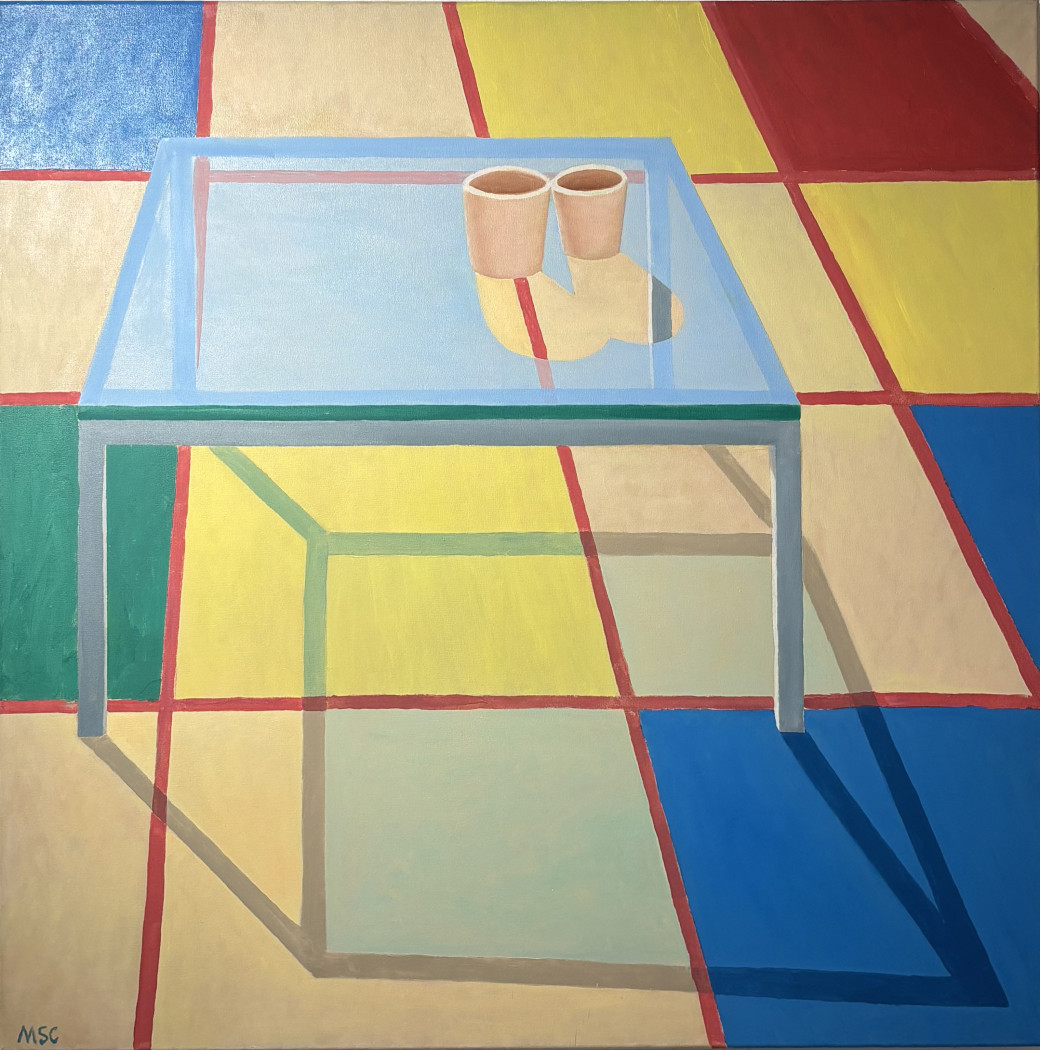
Oil on canvas
100 x 100 cm
I'm interested

Oil on canvas
100 x 100 cm
I'm interested
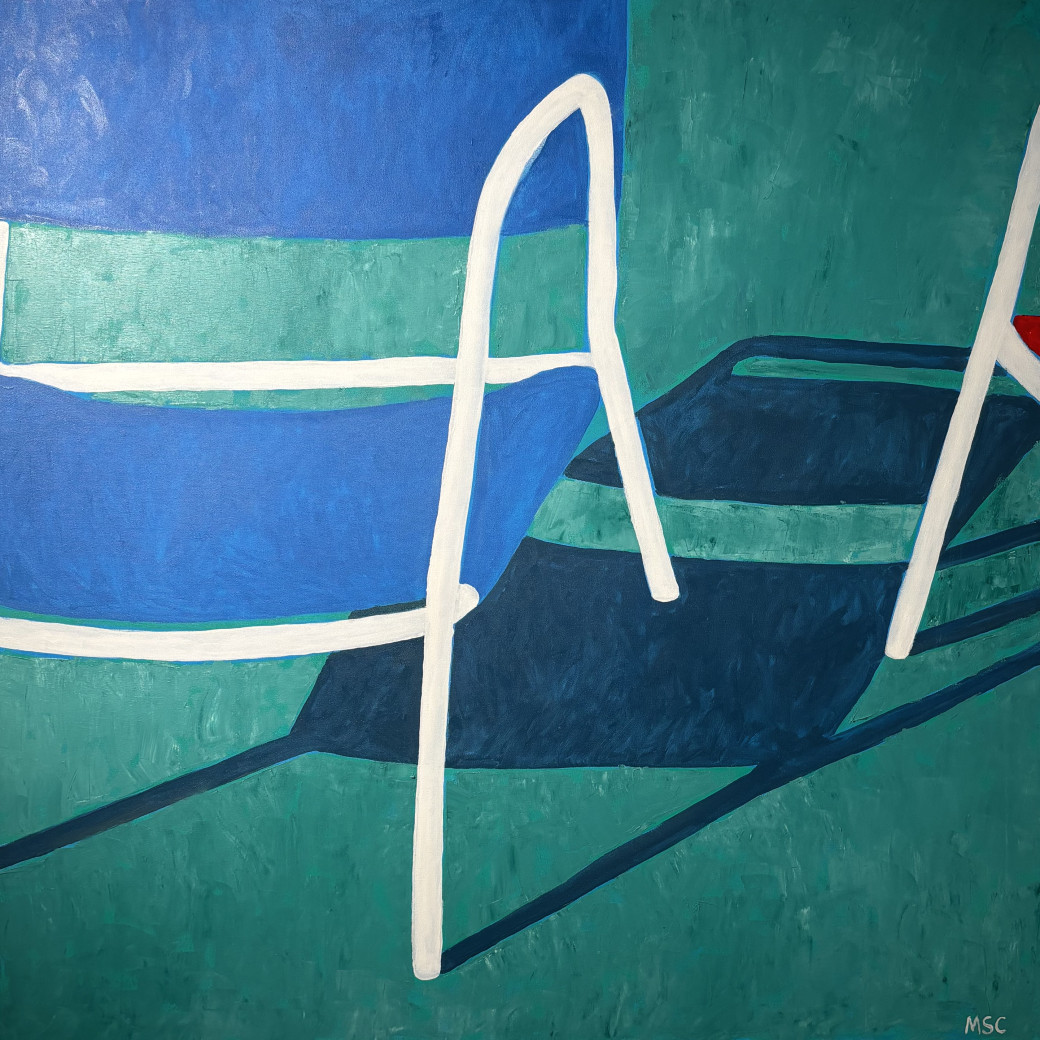
Óleo sobre lienzo
100 x 100 cm
I'm interested
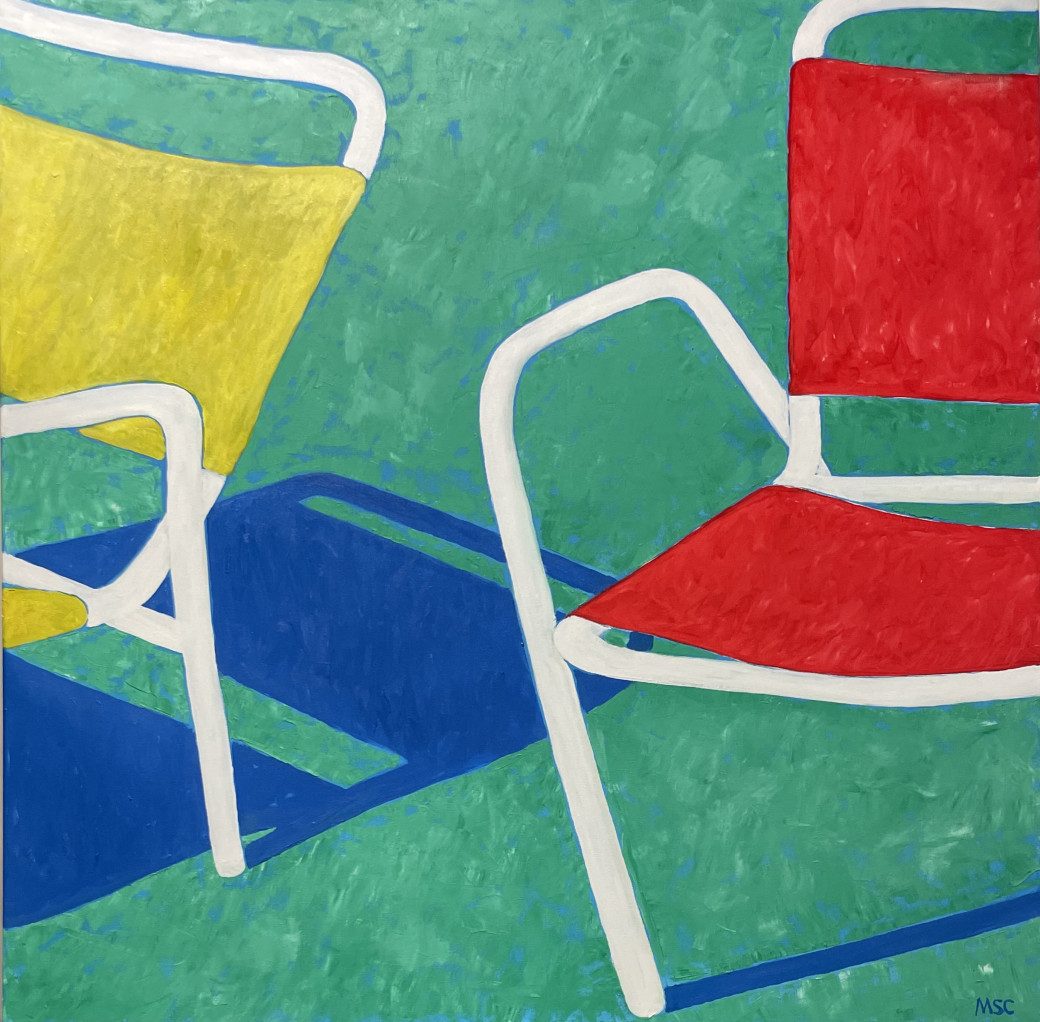
Oil on canvas
100 x 100 cm
I'm interested
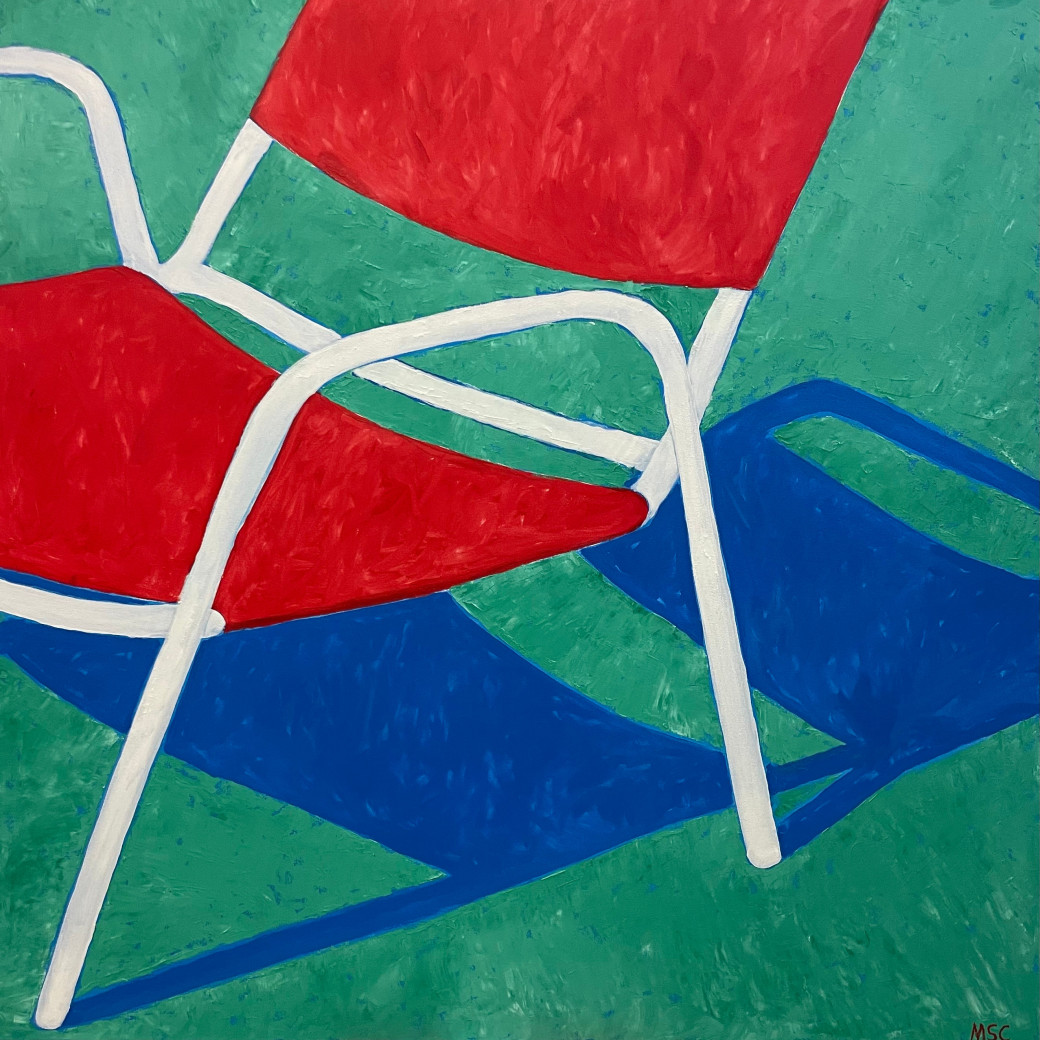
Oil on canvas
100 x 100 cm
I'm interested
Oil on canvas
100 x 100 cm
I'm interested